When most people think about earthquake risk, they focus on the fault itself. However, new research suggests that what lies beneath a building can be just as important as its distance from an earthquake’s epicenter.
A recent study conducted by Lawrence Livermore National Laboratory and Lawrence Berkeley National Laboratory examined how a major earthquake along the Hayward Fault could affect communities throughout the Bay Area. Using advanced computer simulations, researchers found that local geology can significantly influence the intensity of shaking experienced during an earthquake.
The study showed that seismic waves do not travel uniformly through the ground. Areas built on soft sediments and basin-like formations can experience amplified shaking as seismic energy becomes trapped and intensified. In contrast, areas built on more stable bedrock may experience less severe ground motion.
Researchers found that locations such as the Livermore Valley and low-lying areas surrounding San Francisco Bay experienced some of the strongest shaking in their simulations of a magnitude 7.0 earthquake on the Hayward Fault. The findings reinforce an important lesson for property owners throughout California: earthquake damage is influenced by more than magnitude alone.
While the study focused on Northern California, the findings offer valuable lessons for property owners throughout Orange County. Earthquake damage is not determined solely by a building’s distance from a fault. Local soil conditions, building design, and structural integrity can all influence how a property performs during a seismic event.
Although Orange County is often associated with its coastal communities and growing housing market, it is also located within a seismically active region. Fault systems throughout Southern California have the potential to produce significant earthquakes that can impact Orange County residents, businesses, and multifamily properties.
For apartment owners and managers, understanding these risks is an important part of long-term property planning.
One of the most effective ways to prepare for future earthquakes is through seismic retrofitting. Seismic retrofitting strengthens existing buildings so they can better withstand earthquake forces and improve overall structural performance during a seismic event.
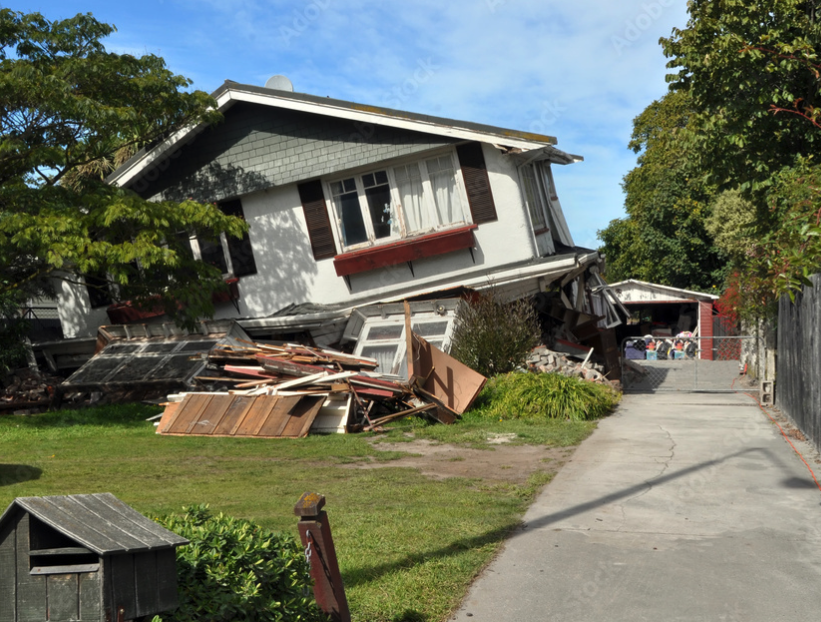
Many multifamily properties throughout Orange County and Southern California were constructed before modern seismic standards were adopted. Older buildings, particularly those with soft-story conditions or aging structural systems, may be more vulnerable during an earthquake.
Strengthening these structures can help reduce the likelihood of severe damage and support a faster recovery after an event. Buildings that sustain less damage are often able to return to service more quickly, helping reduce disruption for residents and property owners alike.
The study also highlights the value of continued research and engineering advancements. Scientists are using increasingly sophisticated tools to better understand how earthquakes affect different communities. These findings help engineers improve building design practices and develop strategies that can reduce future risk.
Preparedness extends beyond structural improvements alone. Property owners can strengthen preparedness by developing emergency response plans, securing heavy items in common areas, and educating onsite teams about earthquake safety procedures. These efforts complement structural improvements and help create a safer environment for residents.
The recent Hayward Fault study is another reminder that earthquakes remain a reality throughout California. While researchers cannot predict exactly when the next major earthquake will occur, studies like this help us better understand the risks and the importance of preparing in advance.
For apartment owners and managers, preparation remains one of the most effective tools for reducing risk. Seismic retrofitting can help strengthen vulnerable buildings, reduce potential damage, and better protect residents when the next earthquake occurs. Taking proactive steps today can help preserve property value and support a faster recovery in the future.
Sources
- Lawrence Livermore National Laboratory and Lawrence Berkeley National Laboratory Hayward Fault ground motion simulation study (2026)
- Seismological Research Letters study on simulated ground motion from a magnitude 7.0 Hayward Fault earthquake
- California Earthquake Authority comments regarding earthquake preparedness and mitigation
- Mercury News article: “Where a major Hayward fault quake could shake the Bay Area hardest” (May 30, 2026)
About Optimum Seismic, Inc.
The Optimum Seismic team has been making California cities safer since 1984 by providing full-service earthquake engineering, steel fabrication and construction services for multifamily residential, commercial and industrial buildings. With more than 4,000 earthquake retrofit and renovation projects completed, Optimum Seismic’s work includes soft-story multifamily apartments, tilt-up, non-ductile concrete, steel moment frame and unreinforced masonry (URM) buildings. To arrange a complimentary assessment of your building’s earthquake resilience, contact Optimum Seismic at (833) 978-7664 or visit optimumseismic.com.