Seems like San Diego is being hit by earthquakes from virtually every direction these days.
A swarm of earthquakes last month near the Salton Sea and subsequent quakes in Baja, California, jostled our city from sleep, reigniting concern that a major temblor may take its toll here.
The swarm in the Mojave Desert prompted warnings from seismologists that those quakes may have a triggering effect on that portion of the San Andreas fault – which, normally rupturing every 250 years, has lain dormant since the 1680s.
The U.S. Geological Survey said the swarm could spark other major earthquakes in more populated areas of Los Angeles, Orange County and farther up the coast. This prompted raise the odds of a cataclysmic 7.0 earthquake along the San Andreas fault to just 1-in-5 in the next 30 years.
Did the desert swarms in early August set off the Mexico quakes a week later?
On Aug. 17, four earthquakes struck the city of Maneadero in Baja, California within just 30 minutes of each other. Measuring 4.4, 5.1, 5.1 and 4.5 on the Richter Scale, they were felt throughout San Diego County, as were many of the aftershocks that persisted 10 hours after those quakes.
Assessing the risks
Earthquakes have the potential to cause significant injury, death and destruction in areas populated with buildings, infrastructure and people.
Last year’s Ridgecrest earthquakes, measuring 6.4, 5.4, and 7.1 on the Richter Scale, caused relatively little damage due to the remoteness of the quakes.
Compare that to the 6.9-magnitude Loma Prieta quake of 1989 ($10 billion in damage), and 1994 Northridge quake ($40 billion in damage), and you can see that a community’s ability to withstand a quake depends on the location of the earthquake and the structural integrity of its buildings.
What Does a Resilient Community Look Like?
The National Science and Technology Council identified four key characteristics of disaster-resilient communities:
- Relevant hazards are recognized and understood
- Communities at risk know when a hazard event is imminent
- Individuals at risk are safe from hazards in their homes and places of work, and
- Disaster-resilient communities experience minimum disruption to life and economy after a hazard event has passed
How prepared is San Diego?
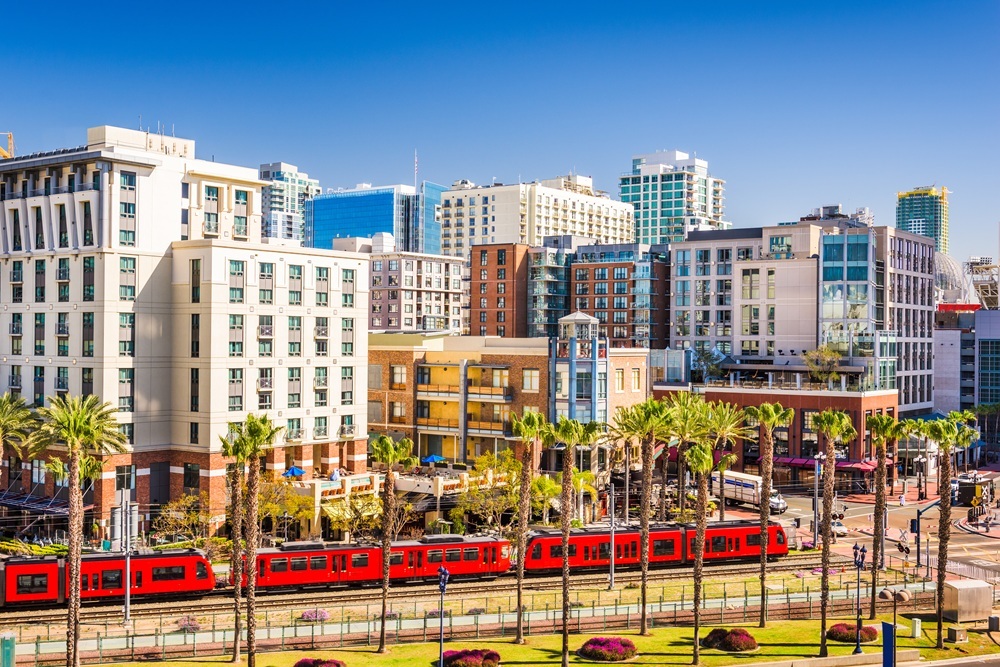
The Rose Canyon Fault runs right through the middle of the city — from the Silver Strand to La Jolla — snaking its way under lofty skyscrapers, commercial districts and apartment buildings that draw tens of thousands of people each day.
Seismologists agree that Rose Canyon, while relatively inactive, has the capacity for a 7.0-magnitude quake – larger and more destructive than Loma Prieta and Northridge.
If such an earthquake does strike San Diego, the damage caused would be colossal: estimated at between $124 million and $13 billion. That’s because many of the buildings in this city were constructed long ago, based on outdated and ineffective codes.
It’s one of the reasons the California Geological Survey ranks San Diego as one of the state’s top 10 areas for projected loss from an earthquake.
Have you protected your building and investment? These recent swarms of quakes should be all the reminder you need.
If you think your apartment may be vulnerable, contact Optimum Seismic today at (833) 978-7664 for a free property assessment.
After all, knowing your risks is the first step to avoiding them