Where can potentially unsafe, soft-story apartment building be found in San Diego? And how many such buildings are there?
Those questions and similar ones about other counties in California led Optimum Seismic, Inc. and the U.S. Resiliency Council to team up with Esri, a leading mapping company, to combine resources to develop maps showing where thousands of potential soft story buildings are in cities large and small throughout Southern California.
The maps were then woven together to present a visual story showing where the quantities and concentrations of older, multistory apartment buildings were located. Such information could be used to help legislators and community leaders identify soft story buildings to better understand where resources might be directed to address these vulnerable structures.
There may be as many as 60,000 locations in California with these older multi-story apartment buildings in cities without retrofit ordinances, representing nearly 800,000 units. If 30% of those structures need retrofitting, that is almost 250,000 units. Assuming an average of 2.5 residents per unit based on census estimates, that represents 625,000 people potentially at risk of death, injury or homelessness when a major earthquake strikes near their homes. (Visit http://bit.ly/3GQAN7m for more information.)
Those at-risk structures also represent thousands of apartment owners whose lifelong investments may be in jeopardy. How would you manage if your income property were destroyed?
Wood-framed, soft-story buildings represent a design commonly found among apartment buildings, because they maximize space by putting parking spaces on the ground floor, with dwelling units above. In some instances, the ground floor may be used as retail space and enclosed by windows that do not provide any structural support.
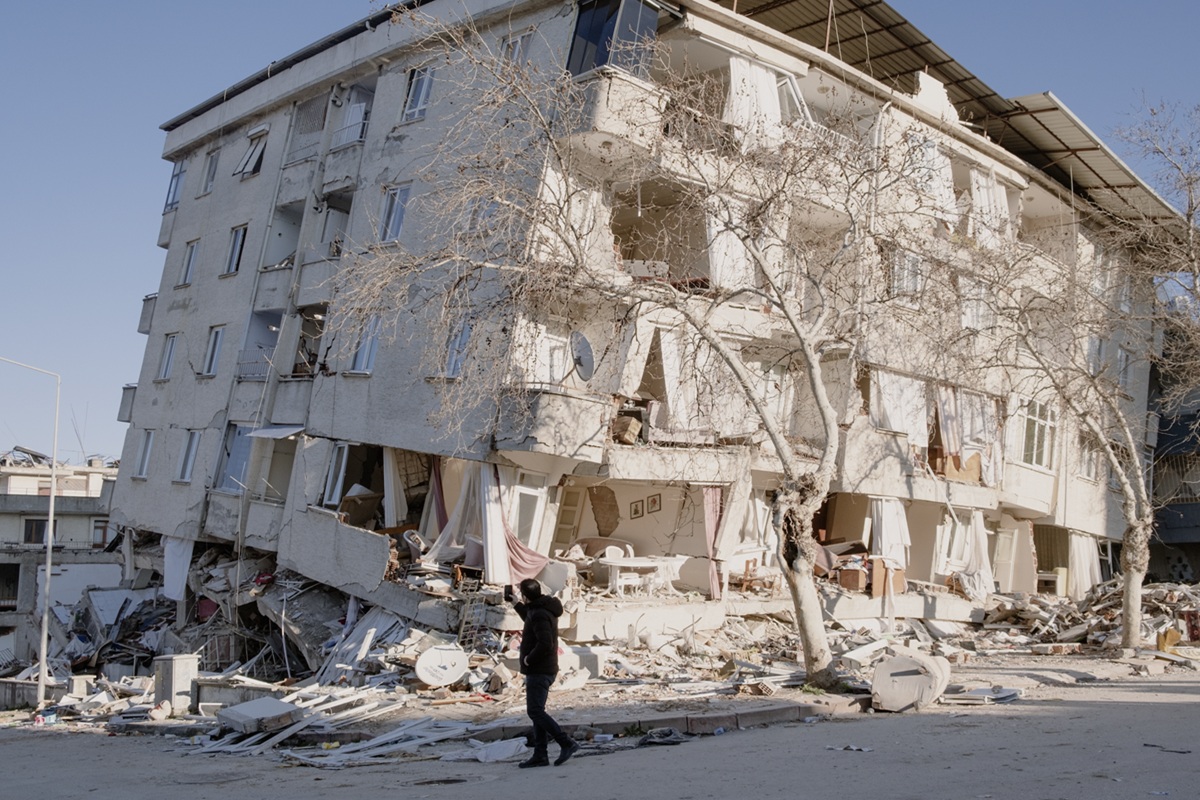
But these structures, when built prior to 1978, can be extremely vulnerable to collapse in a major earthquake. Because of their design, they lack the ability to withstand lateral forces that push the building from side to side. The swaying can cause the first floor to collapse, and the upper stories to pancake on top of it. Retrofit construction for soft-story buildings usually entails the installation of a steel moment frame or frames, a sturdy foundation and drag lines to absorb seismic ground motion and prevent swaying.
We saw these structures collapse to the north of the San Diego area during the 6.7-magnitude Northridge earthquake of 1994. The images of the flattened multi-level soft-story Northridge Meadows apartments – and the smashed vehicles beneath them – still rattle people today.
Earthquake disasters come without warning, and their devastation can happen instantaneously. The situation requires strategic thinking to mitigate the threat. We can’t make earthquakes go away, but we can retrofit structures to withstand them.
In addition to the infamous San Andreas fault, San Diego’s earthquake risk centers on three active quake faults:
- Rose Canyon fault, considered by many San Diego’s biggest earthquake threat, is capable of quakes of magnitude 6.5 to 6.8.
- The Elsinore and San Jacinto faults, which cut through East County, can generate moderately-sized but damaging earthquakes.
The California Earthquake Authority reports that after a major earthquake, the recent EERI San Diego Earthquake Scenario study predicted the region could experience significant impacts:
- Major San Diego earthquakes would ruin the area’s aging apartments and houses, adding to the crisis in affordable housing.
- 45% of residential building would be damaged.
- 23,000 residential units would suffer severe or completed damage.
- 36,000 households would be displaced.
- $5.2 billion in lost income
Seismic retrofits of vulnerable buildings stave off catastrophic social and economic consequences that would cripple the region for many years following a major earthquake. A constrained housing market resulting from red-tagged apartment buildings would drive up the cost of housing even further, resulting in the displacement of even more residents fleeing to more affordable communities. This in turn, would lead to a drastic reduction in the workforce and a drop in consumer spending that would send the local economy in a downward spiral.
If you own a building that you believe may be vulnerable to damage – or if you live or work in one – it’s important to educate yourself on cost-effective measures that can be taken to save lives, protect property, and preserve the well-being of the community-at-large.
Find out the risks you face. Call Optimum Seismic at 833 978-7664 or visit optimumseismic.com for a free building evaluation today.