Plans to convert Long Beach Community Hospital into a multi-service health care campus were recently stalled as officials reviewed a state law requiring governments to give priority to affordable housing developers when selling or leasing surplus land.
When the 98-year-old hospital failed to meet California’s more stringent seismic requirements for a facility of its type, the City Council in 2021 voted to allow for a health care campus instead, which would qualify for occupancy under seismic requirements for that use.
The situation brings up the important need to protect affordable housing in communities throughout California. More than 1.3 million households, representing 22% of renters, qualify as extremely low income, according to the National Low Income Housing Coalition. These renters, living at or below the poverty level, spend more than half of their income on housing – leaving little left to pay for health care and other critical needs, the organization found.
Wealth and resiliency
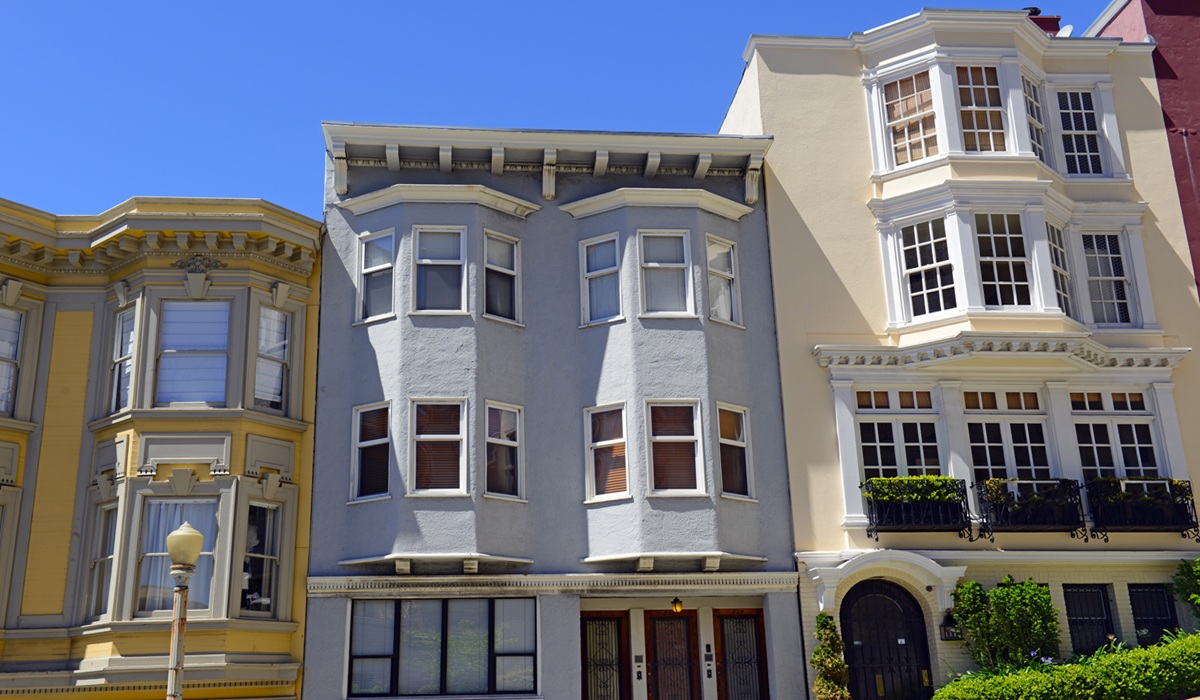
Older buildings typically make up the bulk of a city’s more affordable housing stock, and these structures are frequently prone to problems – including a heightened vulnerability to damage or collapse in major earthquakes.
The Journal of Public Economics found that major earthquakes have a disproportionate impact on people of lower-economic demographics. Researchers Nejat Anbarci, Monica Escaleras and Charles Register found strong correlations between wealth and greater resiliency, citing the discrepancy as a matter of social justice. The researchers called on government to help ensure a more even application of building safety codes and retrofits, stating, “The ultimate lesson therefore is that building and development is simply not a physical process – government institutions and social processes must develop in parallel, to keep up with the physical demands and assure minimum acceptable standards of construction and public safety.”
Older structures, because of their age, are more affordable to rent. But many types built in the mid-1970s or earlier – such as soft-story apartments built over open parking areas – can have structural deficiencies that put them at risk in a major earthquake.
That puts lower-income residents themselves at a greater risk of injury in a quake. It also increases the risk of these vulnerable populations being displaced in a disaster.
Should a major earthquake strike the Long Beach area – a very real threat – many of these structures may be lost if they remain as they stand now. That would bring serious economic losses to this city as potentially thousands of people could be left without a roof over their heads or a job to provide for their families. Many could be forced to leave the area, to live in transitional housing, or face homelessness.
Our built environment provides the stability we need to maintain our quality of life – providing us with homes, schools, social services, and commerce. Yet the bulk of our most vulnerable buildings are represented by older structures that make up a disproportionately broad swath of our state’s more affordable housing stock. This creates an inequitable situation, putting wealth as a key indicator of public safety.
Incentives are needed to help owners of older, more affordable buildings perform necessary seismic retrofit improvements to protect these buildings from major earthquakes and provide safer living and working environments in communities throughout California.
Protecting these affordable buildings makes good economic sense. Retrofitting a typical apartment building costs $5,000 to $10,000 per unit. Replacing affordable units that are lost to earthquakes or other disasters cost some $575,000 per unit. Clearly, protecting affordable multifamily housing is the best course of action.
Are you concerned about the earthquake safety of your investment property? If so, contact Optimum Seismic to arrange a complimentary assessment of your building. This assessment by our team of experts will provide you with the information you need to make the decision that is right for you. Visit optimumseismic.com, or call us at 323-978-7664 to learn more.