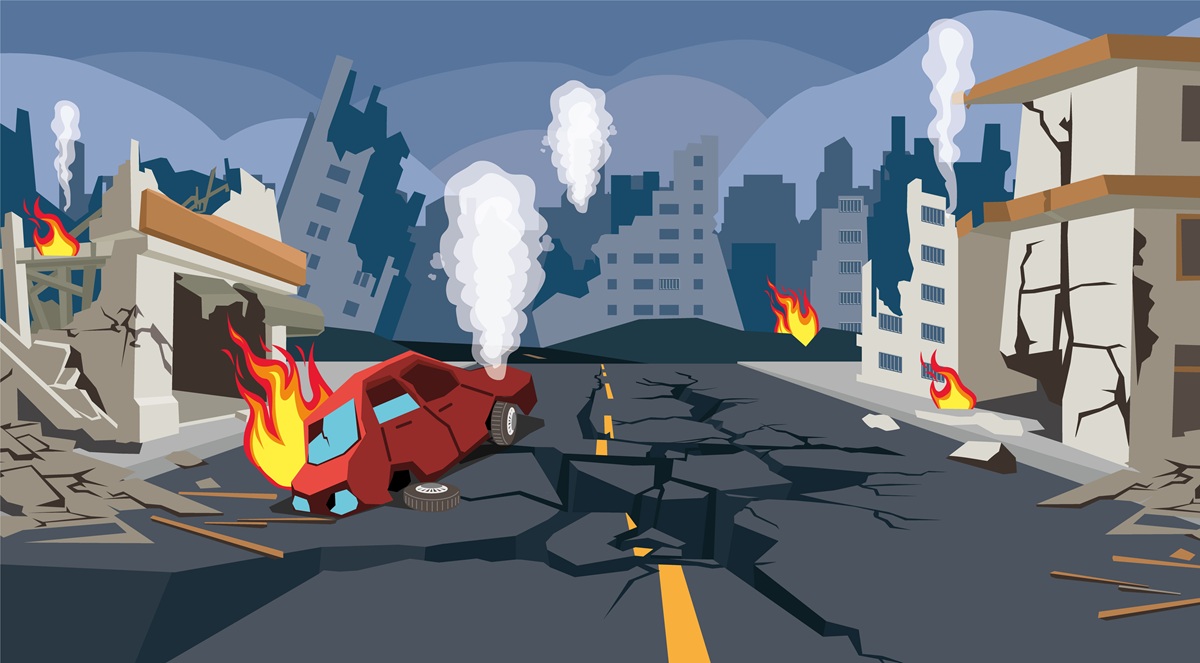
Luigi De Sarno was part of a team of advisors brought in to help the government of Haiti following the 7.0 magnitude earthquake in 2010 that killed more than 200,000 people.
He and other representatives of the World Bank met several times with the Ministries of Health and Public Works, recommending simple and robust seismic design criteria be implemented to avoid future catastrophic events.
He was in Haiti once again in 2021, when a 7.2 magnitude quake struck in a less densely populated region about 150 miles from the capital, Port-au-Prince. This time, at least 137,500 buildings were damaged or destroyed. More than 2,200 were killed, 12,200 injured and 650,000 people left in need of assistance.
Because the recent quake happened farther from the city, damage was much less – but it was still disastrous, nonetheless. De Sarno lamented the lack of action taken a decade earlier when he first warned government leaders to take action to make their city safer. Only a few of the recommendations made by De Sarno’s team were made.
“Stable local governance is a vital component for effective disaster preparedness and in building resilience,” he wrote in The Conversation, an online platform that offers commentary on issues impacting the world. “The United National Office for Disaster Risk Reduction summed it up perfectly when it said, ‘We will not eradicate poverty if we do not reduce disasters.’”
The challenge is on us all, he said.
Local risks
The Newport-Inglewood fault presents a serious risk to residents of the Long Beach area, having dealt Southern California’s deadliest earthquake disaster in 1933.
That 6.4-magnitude earthquake led to 120 deaths, 500 injuries and some 34 terrifying aftershocks in the six hours following the initial jolt. Some $50 million in damage – $921 million in today’s dollars – was reported.
Untold numbers of children were spared from death or injury that day because the quake happened around dinner time. Had it struck just a few hours earlier during the school day, when more than 120 schools were destroyed or severely damaged as facades crumbed and entire floors pancaked on top of each other, the quake would have certainly taken many more than the lives it took that day.
According to the U.S. Geological Survey, “California has more than a 99 percent chance of having a magnitude 6.7 or larger earthquake within the next 30 years.” The likelihood of an earthquake greater than magnitude 7.5 occurring is 46 percent over the next 30 years.”
Los Angeles County ranks as No. 1 in the nation for estimated annualized earthquake loss, the USGS reported.
That’s because, unlike 1933, Los Angeles County has a very high population density, with many people living in multi-story structures at risk of inflicting injury or death, or of suffering serious damage in a major earthquake.
Precisely how vulnerable Long Beach is today to a major earthquake is still to be determined, as the community awaits completion of a seismic resiliency safety database to identify the city’s most vulnerable structures.
Do you know if the apartment building you own or manage is at risk of serious damage? Call Optimum Seismic at (833) 978-7664 for a complimentary evaluation of the structural safety of your apartment building to find out precisely what risks and liabilities you may be facing.