First came a quake, lasting more than 6 terrifying minutes. Then came a tsunami, and after that a nuclear power plant meltdown that left a large section of island country uninhabitable a decade later.
A science fiction movie script. No. This was real life in Japan.
Japan’s 9.0 magnitude earthquake of March 11, 2011 illustrates the complexity of society’s tightly-woven interdependency – and the extreme consequences that can take place when a disaster kicks off a series of cascading events.
The Tohoku earthquake dealt a ruinous blow: destroying buildings and infrastructure, and sparking an even more destructive tsunami measuring 133 feet in height and moving at a rate of more than 400 miles per hour in some places.[1]
The ferocious force of the water killed more than 15,000, and caused several nuclear accidents including the meltdowns at the Fukushima Daiichi Nuclear Power Plant, which forced the evacuation of hundreds of thousands of people.[2]
The economic consequences and global impacts followed almost immediately.
A World Bank study found 90% of bankruptcies linked to the disaster were not directly connected to the disaster, but to indirect supply chain disruptions.[3] (The disaster in Tokyo, for instance, disrupted production of automobiles by Detroit-based General Motors Corporation, with more than 5,000 parts no longer being manufactured.)[4]
Shared consequences, responsibility
Every society represents a dynamic ecosystem threaded from an intricate weave of interdependency.
Businesses support communities with jobs, goods, or services – yet they also depend on people to fill those jobs and purchase those items. Public services provide valuable resources to people, but they are also funded by the people they serve.
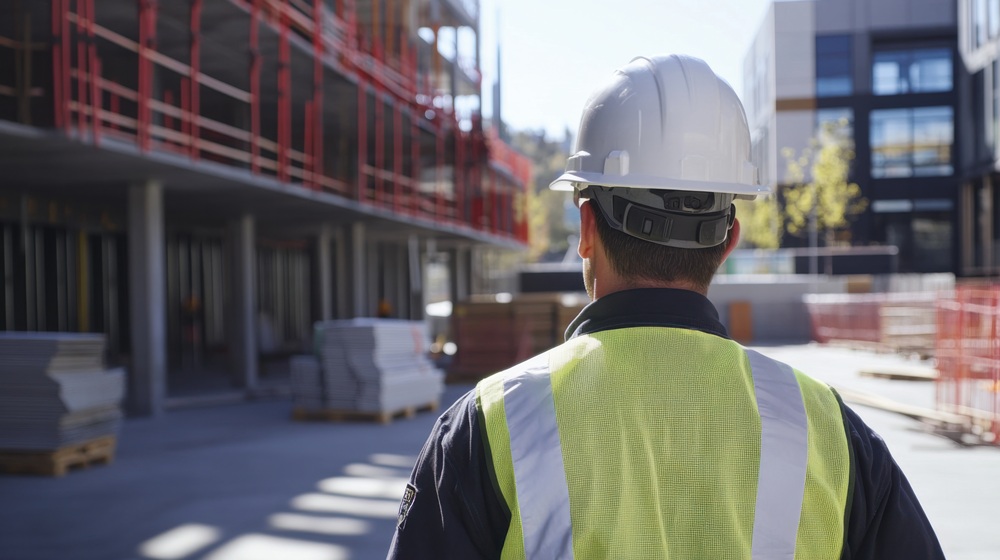
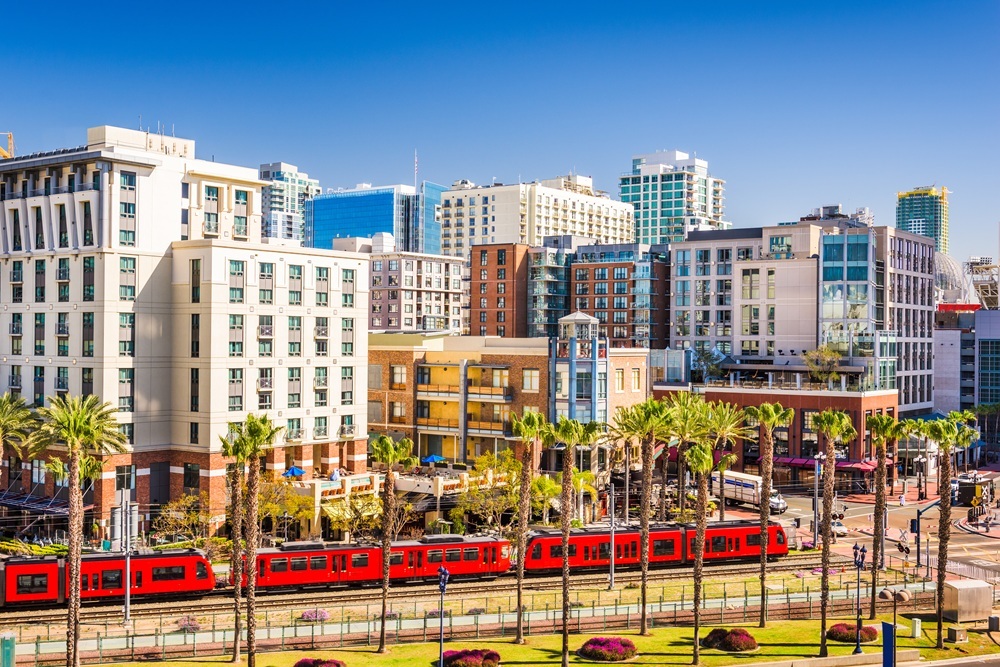
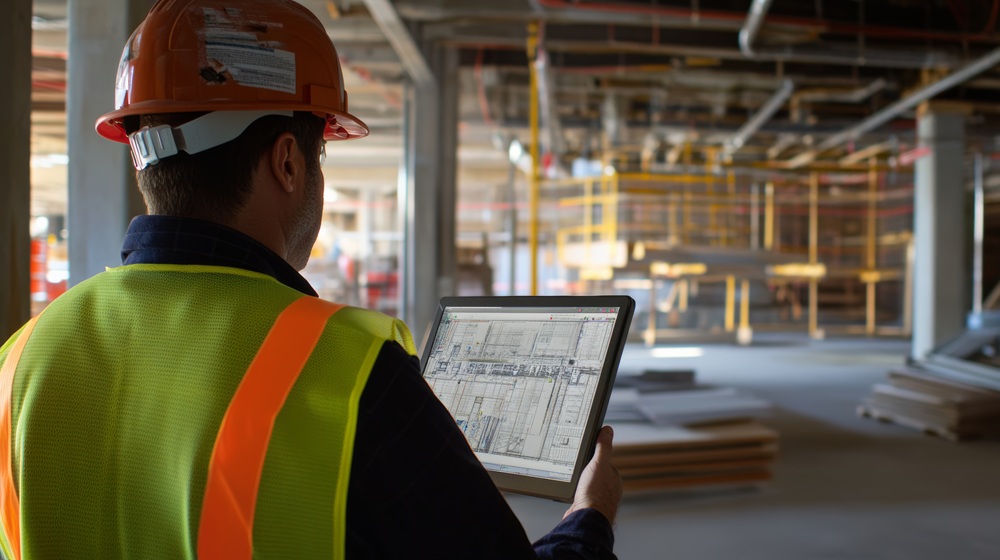
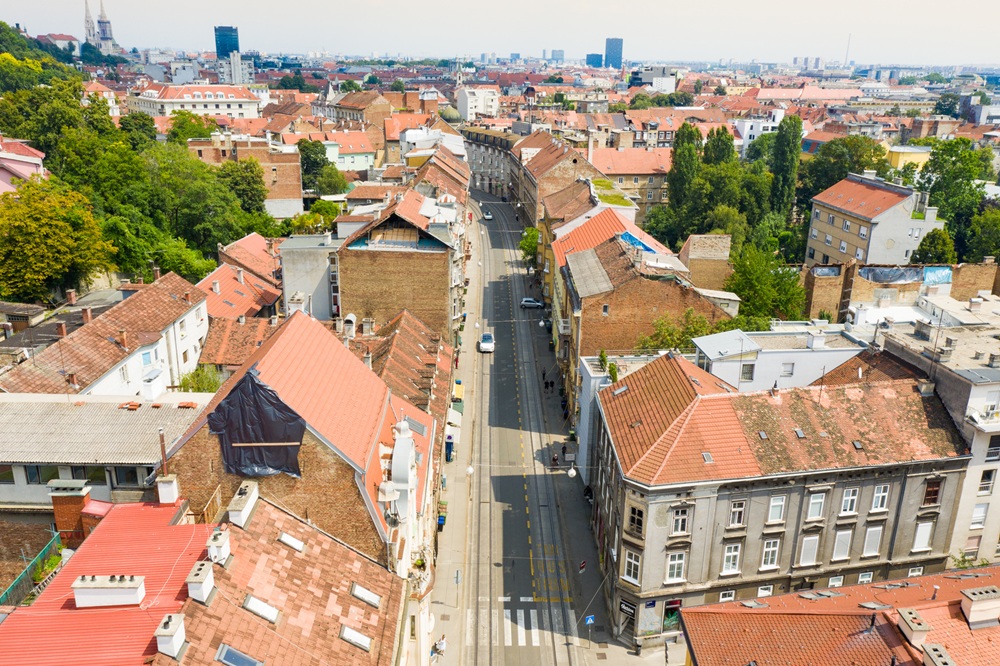
Beyond this, they all depend on a built environment to perform their various functions. Buildings are where we spend much of our lives: eat, sleep, work, shop, worship, learn, and more. Buildings accommodate the social, political, economic, religious, and cultural needs of a community.
The built environment is essential to any community. This is especially evident during natural disasters such as fires, hurricanes, and earthquakes.
The International Monetary Fund in 2019 recommended societies develop a comprehensive disaster resilience strategy founded on three pillars: building structure, financial systems, and social resilience.[5]
Buildings come first in this strategy as they make up the literal foundation of both financial systems and social resilience.
The United States has experienced an increase in natural disasters and associated costs. In California, a series of wildfires and atmospheric storms in the past few years have wreaked havoc with the landscape.
Unlike the storms and fires, earthquakes come without warning: delivering an explosive force – 100 megatons in the case of the 2011 Japan quake[6] For comparison, the atomic bomb dropped on Hiroshima delivered 15 kilotons of force[7] – meaning it would take nearly 67 of those bombs to equal the energy released during the 2011 quake.
Japan has learned from the devastation of past earthquakes, and it is now considered a world leader in constructing earthquake-resilient buildings.
The technology exists today, but these innovations are used only sparingly in the United states.
Seismic safety advocates describe this as a missed opportunity to save billions of dollars in reconstruction costs after the inevitable Big One strikes, the New York Times reported.[8]
Proactive or reactive?
Earthquakes are a natural part of life on this planet. But the amount of damage they cause is a function of decisions made by politicians, engineers, and business executives, the Times stated.
“Japan and the United States, two of the world’s most technologically advanced countries, have the same problem – how to protect people and society from earthquakes – and yet they have responded in very different ways.[9]
Japan, through both government mandates and its engineering culture, builds stronger structures capable of withstanding earthquakes and being used immediately afterward. The United states sets a minimum and less protective standard with the understanding that many buildings will be badly damaged in a major seismic event.[10]
When a major earthquake occurs near a populated area, it typically affects the built environment (buildings, infrastructure, communications, and utilities). This can create many kinds of damage and disruption, as well as prolonged delays in basic services.
Initially, there are fatalities, injuries, and destruction. People search out loved ones, first-responders rush to emergencies, and those who are not initially in harm’s way find themselves on their own as services are rendered to those who need it most.
Next, come the fires, water outages and other service disruptions caused by the earthquake. Some fires may grow into conflagrations that destroy neighborhoods and burn for days, according to the United States Geological Survey. [11]
These initial impacts can significantly hamper public services, bringing about longer-term effects on public health, jobs, communities, and decision-making, the USGS reported.[12] In the Sylmar quake of 1971, two hospitals were destroyed, further limiting the services needed to a desperate community in time of need.
In the months following a major quake, extensive cleanup will be required. Thousands are expected to be left homeless, jobless and without services. Basic goods will be scarce as stores are either red-tagged or cleaned out of supplies with replenishment delayed. Undamaged homes will be unlivable if they lack power, water, or sewer services.[13]
The state of Arizona in 2018 conducted a full-scale earthquake drill, based on the anticipated scenario that 400,000 Southern California evacuees will go there to seek shelter there following the devastation of a massive earthquake.[14]
The reason for this anticipated wave of nearly a half million refugees is simple: The majority of structures identified as at risk of failure in an earthquake represent older, more affordable multifamily housing and commercial buildings that provide much-needed manufacturing, logistics, and service-related jobs in the communities they serve.
Loss of these structures can bring economic devastation, with hundreds of thousands left without a roof over their heads or a job to provide for their families.
We saw this on a small scale when refugees from the 2017 fires in Napa and Sonoma counties faced an out-right housing crisis. Displaced residents, whether they owned their homes or rented, faced an expensive real estate market that was already seriously squeezed by a limited housing stock – particularly for affordable housing. Following the fires, many who lost their homes fell victim to rent-gouging. Families with children doubled-up with neighbors hoping to keep their kids in the same school district.
This is where the fabric of society begins to rapidly fray.
Public services are taxed, and the economic vitality of a community spirals. In many instances, such as with the recovery of New Orleans after Hurricane Katrina, it can take a decade or more to get back to normal.
FEMA launches new program
The Federal Emergency Management Agency launched a new program last year to help states, local communities, tribes and territories take on projects that will make their communities more resilient against natural disaster.
The program, Building Resilient Infrastructure and Communities, replaces the former Pre-Disaster Mitigation program with a focus on supporting communities to develop solutions to their inherent threats through innovation, partnerships, flexibility and consistency.
In 2021, there is $500 million available nationwide through the program, and another $200 million through the Flood Mitigation Assistance program.
To qualify, a project or program must meet the following criteria:[15]
- Be cost-effective
- Reduce or eliminate risk and damage from future natural hazards
- Meet either of the two latest International Building Codes
- Align with the applicable hazard mitigation plan
- Meet all environmental and historic preservation requirements
Direct applicants may include: states, U.S. territories and tribal governments. Sub-applicants may include local governments including cities, counties, special district governments, state agencies and tribal governments who submit applications to their state/territory/tribal applicant agency.
This funding resource may not be directly available to individual building owners, but the funding will go to support state and local programs designed to help spark resilience – one structure at a time.
In California, we need to find a better way to make our existing, affordable multifamily housing safer. We know that more than 200,000 live in the older, soft-story, multifamily apartment buildings. It’s estimated there are more than 100,000 such buildings in California. Some have been earthquake retrofitted to make them safer, but most have not. And many “mom and pop” owners don’t have the funds necessary to make these safety improvements.
Building safety is essential to a functioning society. It ensures:
Economic stability: Studies indicate that widespread homelessness and resulting joblessness from an earthquake disaster in California would trigger billions of dollars of economic loss to communities and the state.
Protection of affordable housing stock: Preserving this inventory of housing will help to avoid catastrophic displacement and homelessness.
Environmental health: Many seismically vulnerable buildings contain asbestos and lead. Preventing these structures from being damaged averts widespread exposure to air, water and humans. It also avoids overburdening landfills to dispose of the ruins of a major quake. Replacing existing building with new construction is also very costly, takes a long time, and consumes more natural resources.
Recommendations to Congress
In 2021 FEMA took a step forward in its push for resilience. Teaming up with the Applied Technology Council and the National Institute of Standards and Technology, the agency published a report on resilience that was delivered to Congress in January.
The 135-page report, “Recommended Options for Improving the Built Environment for Post-Earthquake Reoccupancy and Functional Recovery Time,” provides a set of recommendations, tasks, and alternatives for improving the built environment, which have been developed and assessed by a committee of experts from around the nation.
It describes community resilience, defines the concepts of what it takes to get communities back on their feet after a disaster, and examines the cost of recovery versus preparedness.
Costs and benefits associated with enhanced seismic design were also an important part of the report.
“Almost half of the U.S. population – 150 million people – reside in portions of 42 states that are at risk of experiencing a damaging earthquake within the next 50 years,” the FEMA report stated. “Earthquakes have caused disastrous impacts in the past and are expected to cause more in the future. In regions of high seismic risk where an earthquake hasn’t occurred for some time, scenario studies predict deaths in the thousands, injuries in the tens of thousands, and hundreds of billions of dollars in direct economic losses, along with long-term destabilizing impacts to community function.”[16]
The report notes that disaster does not happen in isolation – particularly when it strikes in populated metropolitan areas such as Los Angeles or San Francisco.
“A disaster in one community or state can have economic and social impacts on neighboring communities or states, if not the entire nation, highlighting the importance of natural hazard mitigation and the federal level,” the report states.
The reports top three findings include recommendations to:
- Develop building codes and standards that go beyond safety-based objectives to address recovery-based objectives, which means the building will be functional after a major quake.
- Establish national recovery-based policies to target recovery times for various building functions and lifeline services.
- Encourage private-sector building retrofits to meet recovery-based objectives. (This was focused specifically on soft-story wood-frame multifamily dwellings, where FEMA projected savings at about $12 for every dollar spent.)[17]
What benefits one, benefits all
“What benefits one, benefits all – and what benefits all, benefits one.”
This adage underscores the true meaning of community. Incidents in our lives ripple through society in small ways. When a layoff – or a promotion – happens in one household, it affects nearby businesses, which in turn pass that impact on to its employees, who continue the cycle.
On an individual level, it seems inconsequential, but impacts add up quickly when the layoff or promotion is the reflection of a larger trend.
In every major city in the U.S. today, there are thousands of buildings at risk of failure in an earthquake.
Los Angeles alone identified around 13,000 wood-framed, soft-story structures and 1,322 non-ductile concrete buildings. Long Beach identified another 1,400 buildings.[18] Fortunately, Los Angeles is making good progress towards retrofitting buildings after adopting a mandatory ordinance.
How would the ripple effect play out if a major earthquake destroyed even a fraction of those structures?
These buildings constitute much more than a roof, walls, windows, and doors.
Each one represents hundreds, if not thousands of lives and livelihoods: tenants, employees, customers, students, health care workers and patients, and the list goes on.
Communities need to share in the responsibility of building resilience to ensure the quality to our lives.
Government can do its part by identifying vulnerable buildings and providing incentives to have them retrofitted.
Building owners can help by ensuring their investments will stand strong in a major quake, continue to provide the income they depend on, and remain ready to provide the community vitally needed shelter.
[1] Wikipedia, 2011 Tohoku earthquake and tsunami, https://en.wikipedia.org/wiki/2011_T%C5%8Dhoku_earthquake_and_tsunami[2] Ibid.
[3] World Bank, Resilient Industries in Japan, documents1.worldbank.org/curated/en/757291604041567018/pdf/Resilient-Industries-in-Japan-Lessons-Learned-in-Japan-on-Enhancing-Competitive-Industries-in-the-Face-of-Disasters-Caused-by-Natural-Hazards.pdf
[4] Ibid.
[5] IMF, Building Resilience in Developing Countries, https://www.imf.org/en/Publications/Policy-Papers/Issues/2019/06/24/Building-Resilience-in-Developing-Countries-Vulnerable-to-Large-Natural-Disasters-47020
[6] Physics Today, Insights from the Great 2011 Japan earthquake, https://physicstoday.scitation.org/doi/10.1063/PT.3.1361
Brittanica, https://www.britannica.com/science/megaton
[7] World Nuclear Association https://www.world-nuclear.org/information-library/safety-and-security/non-proliferation/hiroshima,-nagasaki,-and-subsequent-weapons- testin.aspx#:~:text=On%20this%20basis%20of%20comparison,was%20of%2025%20kilotons%20(ca.
[8] New Yok Times, Buildings can be designed to withstand earthquakes. Why doesn’t the U.S. build more of them? https://www.nytimes.com/interactive/2019/06/03/us/earthquake-preparedness-usa-japan.html
[9] Ibid.
[10] Ibid.
[11] USGS, https://wim.usgs.gov/geonarrative/safrr/WTE_earthquake/
[12] Ibid.
[13] Ibid.
[14] CBS News, Arizona preparing for earthquake evacuees. https://losangeles.cbslocal.com/2018/05/23/arizona-california-earthquake-evacuation-practice-runs/
[15] FEMA, https://www.fema.gov/grants/mitigation/building-resilient-infrastructure-communities/before-apply
[16] FEMA, Recommended options for improving the build environment for post=earthquake reoccupancy and functional recovery time, January, 2021.
[17] Ibid.
[18] Los Angeles Department of Building Services, https://ladbs.org/services/core-services/plan-check-permit/plan-check-permit-special-assistance/mandatory-retrofit-programs